
Can Portable Projectors Work in Daylight? Lumens Explained
Last Updated: November 21, 2026
Quick Summary
Can portable projectors work in daylight? Some can show a visible image in a dim room, but bright sunlit spaces need far more light output than most budget models deliver. Results depend heavily on the model's lumen rating and the room.
- Compare lumen figures only when they use the same standard, such as ANSI lumens.
- A high lumen number alone does not guarantee a sharp or colorful picture in bright light.
- Pick a shaded spot facing away from the sun and start at dusk.
- Many portable projectors need external power, so plan a power bank or outlet before going outside.
- Closing curtains and dimming the room will help more than any single setting.
Table of Contents
- How Much Brightness a Portable Projector Needs for Daylight
- How to See a Projector in Daylight Outside
- Choosing a Daytime Projector Screen and the Best Setup for Bright Rooms
- Frequently Asked Questions
How Much Brightness a Portable Projector Needs for Daylight
Most people expect a big, bright picture the moment they turn a portable projector on, and daylight is where that breaks. Can portable projectors work in daylight? Some show a visible image in a dim room with blinds partly closed, but a bright sunlit space needs far more light output than most budget models deliver, so the honest answer is that can portable projectors work in daylight depends heavily on the model and the room.
The key number is lumens, which measures total light output, but brightness claims are not always comparable because sellers use different standards. Treat any single listed number as a rough guide, and check whether the rating is ANSI lumens, the more consistent standard, before comparing models.
A high lumen number does not guarantee a sharp or colorful picture in bright light, because the image can wash out even when the projector is technically bright enough.
The YG300 Pro Mini LED Projector lists 1000 lumens, but its native resolution is 320 × 240 pixels and the brightness figure is unverified. It suits dim or dark settings rather than daylight; if you want a compact option to compare specs against, check the listed figures against your room before buying.
How to See a Projector in Daylight Outside
Outdoor daytime projection is the hardest test, because sunlight overwhelms most projected images. Shade and a dark backdrop matter more than raw output, so pick a shaded wall or covered patio, keep direct sunlight off the screen, and place the projector behind viewers where possible.
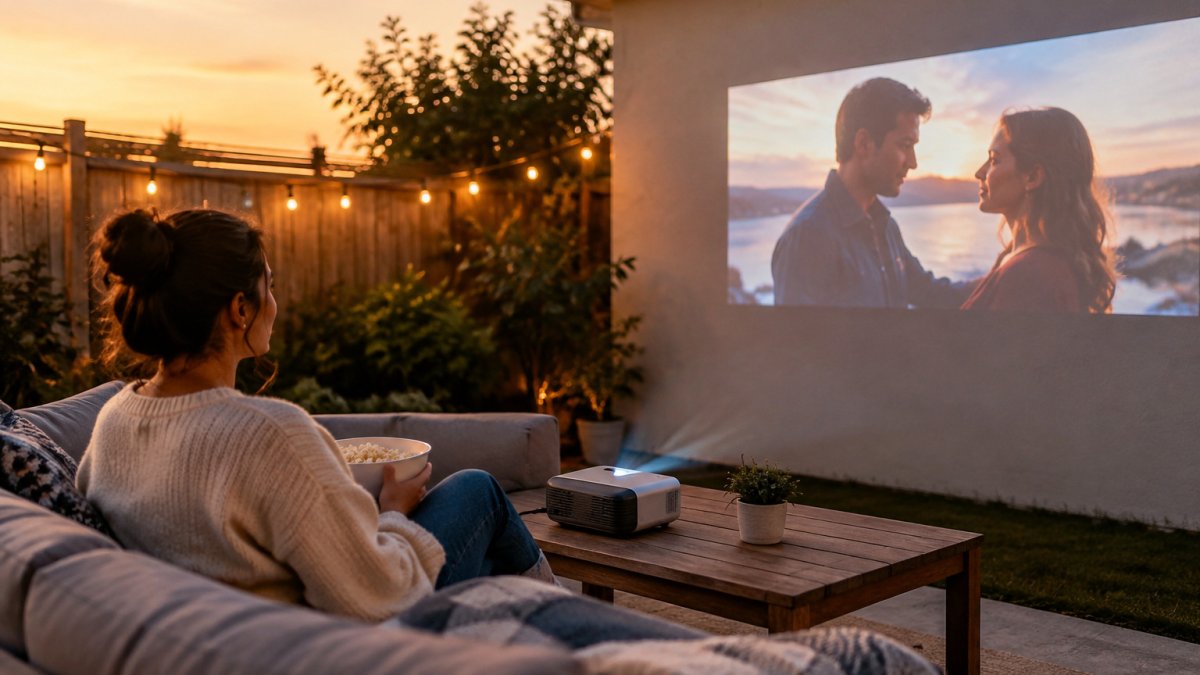
Here is a simple approach:
- Choose a shaded spot facing away from the sun.
- Use a light-colored, flat surface or a dedicated screen.
- Start at dusk, when ambient light drops.
- Test the image before the event.
Power is another limit: many portable projectors need external power, so plan for a power bank or outlet and confirm the required output before you go outside.
Outdoor daytime projection is hard, so the article's key setup points are summarised below.
| Step | What to do | Timing |
|---|---|---|
| Pick a spot | Choose a shaded area facing away from the sun | Before the event |
| Choose a surface | Use a light-colored, flat surface or dedicated screen | Before the event |
| Time it | Start at dusk, when ambient light drops | At dusk |
| Check power | Plan a power bank or outlet with the required output | Before going outside |
| Test the image | Run a test before the event | Before the event |
Choosing a Daytime Projector Screen and the Best Setup for Bright Rooms
A better surface can improve daytime results more than an upgrade in projector brightness. A plain white wall works for casual viewing, but it reflects room light back onto the picture and reduces contrast.
Screen size and distance also affect how bright the image looks. A larger image spreads the same light over more area, so it looks dimmer. Keep the image modest in bright rooms, and place the projector at a distance that gives a usable size without stretching brightness too thin. Check whether portable projectors are bright enough for apartments before you commit to a setup. Closing curtains and turning off overhead lights will do more for image visibility than any single setting. If you are mounting the projector overhead, advice on choosing a mini projector for ceiling viewing covers suitable placements.
Do not expect a cinema-style picture in full daylight. Closing curtains and dimming the room will help most evening viewing setups.
Frequently Asked Questions
Can I use my projector outside during the day?
Yes, but expect a dim image. Direct sunlight washes out most portable projectors, so the best results come from shade, a covered patio or a dusk start. Position the projector so no direct sun hits the lens, and use a light-colored, flat surface. Pick a model with a clearly stated brightness rating, and test the setup at the time you plan to watch before the guests arrive.
How many lumens do you need to use a projector in daylight?
Lumens are a rough guide, not a guarantee. Dim, shaded settings can work with a few hundred ANSI lumens, while a room with open curtains usually needs more. Many manufacturer figures are not measured under the same standard, so compare ANSI lumen ratings where published. The YG300 Pro lists 1000 lumens, but that figure is not independently verified as ANSI, so it should not be read as a daylight rating.
Do portable projectors work better indoors or outdoors in daylight?
Indoors is usually easier. You can close curtains or blinds to block daylight and control the light on the wall. Outdoors, shade and dusk give the best results. Indoors with the curtains open, expect a washed-out picture unless the projector is very bright and the screen is small. For a bright living room, close the curtains and choose a dim evening window.
