
How to Organize a Small Office Space That Stays Clear
Last Updated: November 22, 2026
Quick Summary
Small office organization starts with measuring your room before buying anything, then mapping your desk footprint, outlets and door swings. Group items by how often you use them, keep daily tools within arm's reach, and build a short shopping list from those exact dimensions.
- Measure room width, depth and ceiling height before buying any storage.
- Mark outlets, windows, vents and door swings on your layout sketch.
- Keep daily-use items within arm's reach and rarely used items up high.
- Map device plugs before choosing a desk setup to reduce cord clutter.
- Take an inventory of containers you already own before buying new ones.
Table of Contents
Smart organization for small office spaces starts with a simple rule: measure first, buy second. Most cluttered small offices aren't short on storage. They're short on planning. Plenty of people buy shelves, bins and desk gadgets that never fit the room they were meant for.
Start with your floor and wall dimensions. Note where your outlets, windows and doors sit. Then mark where your desk, chair and daily tools will go. A cramped corner with a radiator or a door that swings into a shelf is a planning problem, not a shopping problem.
Watch out: measuring a wall once and buying in a hurry is how people end up returning organizers that block a door or stick out too far from the desk.
How to Build a Simple Layout Plan
- Measure the room width, depth and ceiling height
- Mark outlets, windows, vents and door swings
- Sketch your desk footprint and chair clearance
- List every item that needs a home, from cables to paper files
- Group items by how often you use them
This last step matters most. Things you touch daily belong within arm's reach. Things you touch weekly can sit on a shelf. Items you rarely use can go up high or into a closet.
Think About Reach and Movement
A good small office layout keeps your most-used items within an easy stretch. Most people sit with their elbows bent and their forearms resting on the desk, so keep frequent items inside that zone. Anything you need to stand up for should be placed where you don't have to twist or strain.
Check the layout from your actual chair, not from the doorway. Sit down, reach out and see what's comfortable. If you find yourself leaning or stretching all day, move things before you buy anything new.
Plan for Power and Cables
Cords cause more clutter than almost anything else in a small office. Map out where your devices plug in before you choose a desk setup. A compact power strip with USB ports can cut down on loose adapters.
Write Down Your Plan Before Shopping
Once your measurements and layout are on paper, write a short shopping list with exact sizes. Note the maximum height a shelf can have, how wide a bin needs to be, and how far a wall-mounted item can stick out.
Keep the plan near you while you shop. It turns a vague wish for "more space" into specific decisions you can actually make.
Small Office Organization on a Budget: Start With What You Already Have
Small office organization on a budget starts with a quick inventory of what you already own. Most people have useful storage sitting in a closet, a drawer or a corner of the kitchen. Before you buy another bin, use what's on hand.
Look for shoe boxes, cereal boxes cut down to size, and old file folders. A sturdy shoebox can hold cables, batteries or small supplies. A tension rod can create a quick hanging space under a shelf. These fixes cost nothing and let you test your system before committing money.
A Quick Budget Audit
- Pull out every container you already own
- Sort items into keep, move, or donate piles
- Note which storage gaps remain after you reorganize
- Buy only for the gaps, not for the whole room
Once you clear out what you don't use, the real need often fits in one or two inexpensive pieces.
Smart Ways to Stretch Your Money
If you do need to buy something, focus on items that do double duty. A drawer organizer can hold pens, clips and sticky notes. A desk tray can sort mail and receipts. A power strip with built-in USB ports replaces separate chargers and reduces cord clutter.
Watch out: cheap storage that bends or collapses under weight will waste your money fast. Check the weight rating before you buy.
Know When to Spend More
Some items are worth paying for. A stable shelf that holds heavy binders, or a phone stand that keeps your device secure, can save you from constant frustration. Spend on the things you use every day, and keep costs low on items you rarely touch.
Start small, live with your setup for a week, and add only what you truly miss. That approach keeps your budget intact and gives you a system that actually works.
How Can You Declutter a Small Office Without Losing Essentials?
Decluttering a small office works best when you sort by use, not by guilt. Keep what you need to work, and let go of what's just taking up space. The goal is a clear desk and a clear mind, without tossing out the things you'll reach for on a busy Tuesday.
Start with the desk surface. Clear everything off, then return only the items you use daily. Your keyboard, mouse, a notebook and your most-used tools usually make the cut. Everything else gets a new home or a second look.
A Simple Sorting Method
- Keep: items you used in the past week
- Store: items you use monthly or occasionally
- Donate or recycle: broken, duplicate or expired items
- Archive: paperwork you must keep but rarely open
This sorting method keeps essentials within reach while moving everything else out of the way. Work through one drawer or shelf at a time so you don't get overwhelmed.
Protect the Things You Can't Afford to Lose
Before you toss anything, check for items that matter more than they look. Chargers, passwords written on sticky notes, and original receipts for equipment often hide in clutter. Create a single labeled folder or drawer for these items so they stop getting lost.
Common mistake: throwing out a cable or adapter because you don't recognize it. Test it first, or set it aside in a labeled bag for a week before you decide.
Handle Paper Piles Carefully
Paper is the hardest clutter to manage. Sort incoming mail into three piles: act now, file, and recycle. Set a time each week to deal with the act-now pile. Scan or photograph documents you need to keep if you have a scanner.
Once the surface is clear, a small desk stays manageable with a daily five-minute reset. Put items back where they belong at the end of each workday. That habit does more to prevent clutter than any single organizer.
Small Desk Organization Ideas That Use Vertical and Wall Space
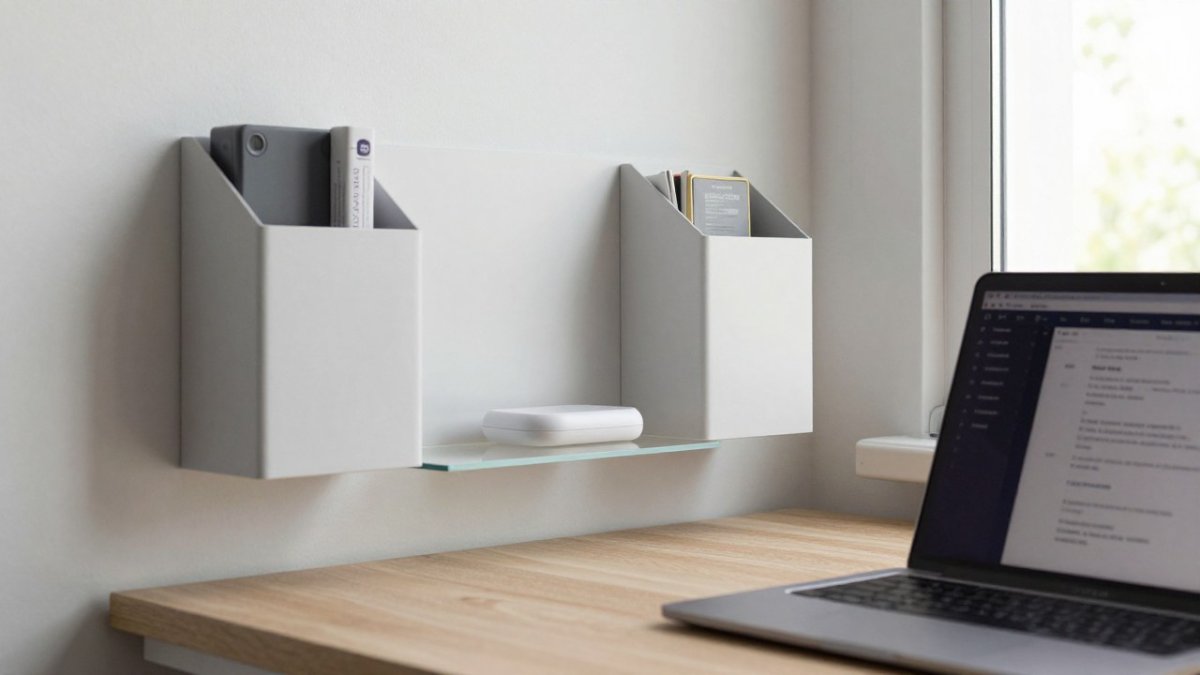
Small desk organization gets easier when you look up instead of across. Walls and vertical space can hold items that would otherwise crowd your desktop. A wall-mounted organizer or a shelf above the monitor can free up the work surface you need.
Mount a small rail or pegboard near your desk for frequently used tools, notepads or a headset. Keep the heaviest items low and close to the wall for stability. Anything that could tip should stay out of high reach.
A compact USB-C hub can help clear desk clutter. The Multiport USB-C Hub Type C to USB 3.0 4K HDMI Adapter for Macbook Pro / Air USA combines several ports in one device. Fewer cables on the desk means more room for your work.
Vertical Storage Ideas That Work
- Wall-mounted shelves for books and binders
- Pegboards for tools, pens and small supplies
- Over-the-desk shelves for monitors or lamps
- Magnetic strips for metal tools and clips
Watch out: mounting something into drywall without checking the wall type can lead to falls. Use anchors rated for the weight you plan to hang.
Keep Your Phone Off the Desk
A phone stand can free up a lot of desk space. The Metal Expansion Phone Stand for Laptop and Tesla Vehicles uses a magnetic design that holds your phone securely.
Position your phone where you can glance at notifications without turning your head too far. Keeping the screen at eye level also helps your neck stay relaxed during long workdays.
What Storage Works Best for a Small Desk and Shelving Setup?
The best storage for a small desk combines shelving with containers you can grab quickly. Open shelves work well for items you use often. Closed bins keep small supplies out of sight and cut visual clutter. A mix of both usually works best in a small office.
Choose shelving that matches your wall space and weight needs. Floating shelves look clean, but they need solid mounting. Freestanding bookcases are easier to move, though they take up floor space. Measure before you commit.
Choosing Containers and Trays
- Shallow trays for pens, clips and sticky notes
- Stackable bins for cables, batteries and chargers
- Hanging file folders for paperwork
- Clear containers so you can see what's inside
Stackable and modular storage is a smart choice for small spaces. You can add or remove units as your needs change. Stick with a consistent size so the stack stays steady and tidy.
Setting Up a Shelving Zone
Group your shelves by use. Put reference books and binders on one shelf, supplies on another, and tech accessories on a third. Label each container. A label takes seconds to make and saves minutes every day when you're looking for something.
A shelf is often easiest to use when it isn't packed to the top. A fully packed shelf makes it hard to grab things.
DIY Office Organization: Build Your Own Storage Solutions
DIY office organization can cost very little and fit your exact space. A simple project like a wall-mounted holder or a custom desk tray can solve a specific problem better than most store-bought options. Start with a clear need, a basic plan and the right materials.
Before you cut or drill anything, measure twice. Check that your wall can hold the weight you plan to add. Use a stud finder and proper anchors. If you're unsure, a small test piece can show you how the design works before you build the full version.
For a projector setup, a mini projector can be mounted on a ceiling without drilling if you use a sturdy, freestanding or clamp-style mount. Our guide on picking the right mini projector for ceiling viewing covers the features to look for before you buy.
Simple DIY Projects to Try
- A wooden desk tray made from a cut board and small blocks
- A wall-mounted cable organizer using cable clips and a strip of wood
- A file holder made from a cardboard box and washi tape
- A shelf made from brackets and a single board
Tips for Building Storage That Lasts
- Sand rough edges and wipe away dust before finishing
- Use screws rated for the material you're working with
- Test the weight of a finished piece before loading it
- Leave room for air and easy access to outlets
Common mistake: building a storage piece that's too deep for the space. Check the depth against your desk and walkway before you finish the project. A piece that blocks a chair or a doorway creates new problems.
Keeping Your Small Office Organized Week After Week
A clear small office stays clear with a short weekly routine. Organization is a habit, not a one-time event. Set aside a few minutes each day and a longer block each week to keep everything in its place.
End each workday with a quick reset. Clear the desk, put tools back in their containers, and toss any trash. This takes five minutes and prevents the slow build-up that makes a room feel chaotic again by Friday.
A Simple Weekly Routine
- Daily: clear the desk and return items to their homes
- Weekly: sort new paper, empty trash and check cables
- Monthly: review storage and remove anything you no longer use
- Quarterly: reassess your layout and adjust for new needs
Letting paper pile up for a week or two can make a small office hard to manage. Deal with it on a set day.
Build the Habit That Sticks
Pick one reset task and make it automatic. For many people, that's returning cables to a bin before they leave for the day. Once it becomes routine, the rest of your system holds together with much less effort.
Your small office stays clear when your storage makes sense, your layout fits your needs and your routine is easy to follow. Start with the steps above, and adjust as your work changes.
Frequently Asked Questions
What are some good ideas for organizing a small office space?
Start by clearing the desktop and assigning every item a home. Use wall-mounted organizers, a shallow drawer tray and a desk shelf to lift supplies off the work surface. Group items by how often you use them: daily tools stay within arm's reach, while archived paperwork moves to a closed bin or shelf. Review the setup every few weeks and remove anything you have not touched in a month.
How can I organize a small office on a budget?
Begin with what you already own. Shoeboxes, mason jars, file folders and cardboard dividers can hold pens, cables and receipts at no cost. Add a small investment only where it removes a repeated problem, such as a $15 to $25 desk tray or a basic wall pegboard. Measure before you buy so you do not pay for organizers that do not fit your desk or wall.
What storage works best for a small desk?
Choose storage that sits above or beside the desk rather than on it. A desktop riser or monitor shelf adds storage underneath, a pen cup and tray keep small items corralled, and a slim rolling cart fits in a gap at the side. Stackable bins work well for supplies you need occasionally. Avoid deep containers that force you to dig for items you use daily.
How do I get rid of office clutter?
Work in short sessions and sort into four piles: keep, store, donate and discard. Handle paper once by scanning or filing it immediately, and set a rule that every new item needs a designated spot. Decluttering digital files also helps, so delete duplicate downloads and archive finished projects to a labeled folder. A ten-minute reset at the end of each workday prevents clutter from building back up.
